
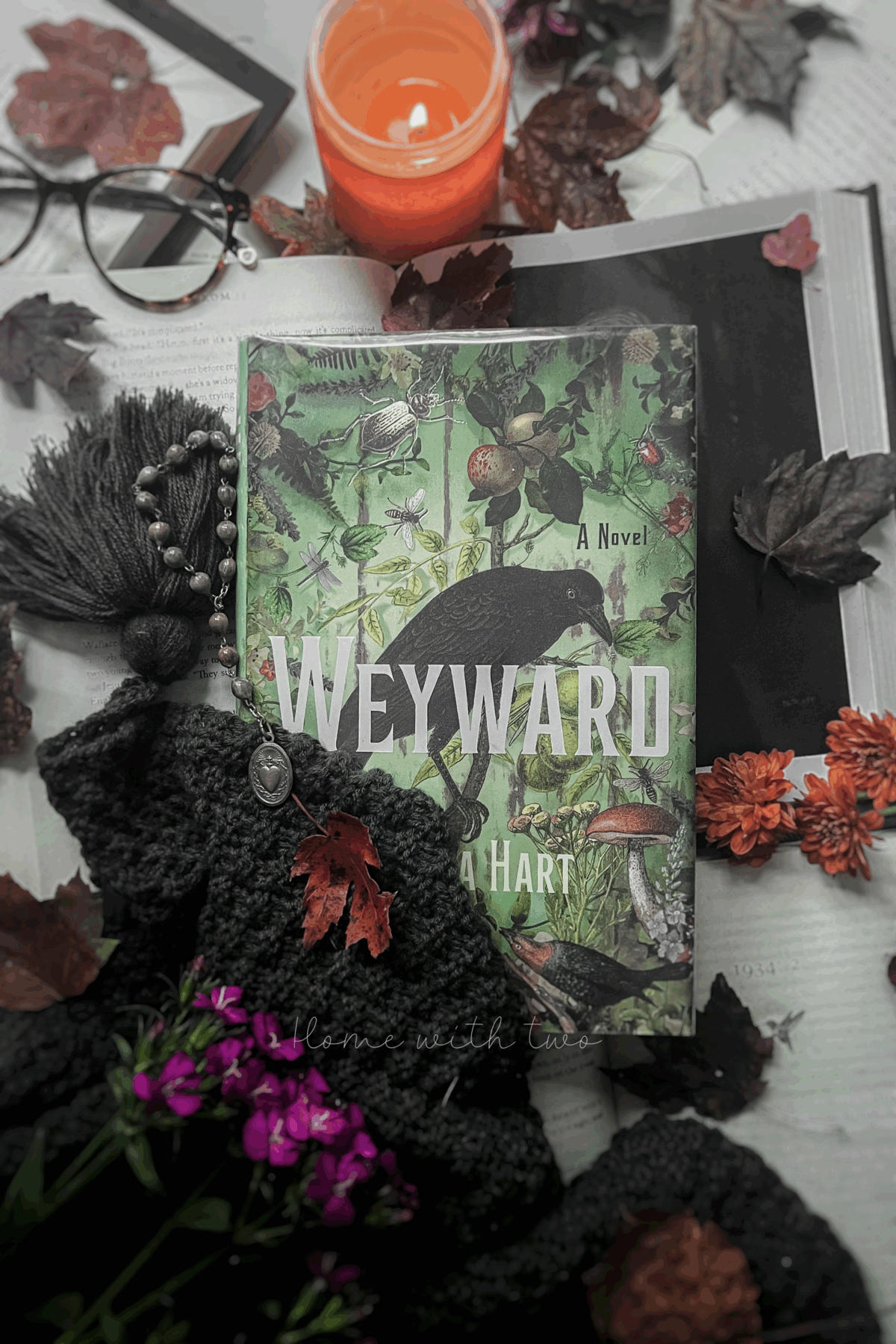
Weyward by Emila Hart: Witchcraft, Womanhood, & What We Keep
When Weyward opened with a line from Macbeth about the Weyward Sisters (later changed to “Weird Sisters”), I thought: yes, this is exactly what I will frame my blog post around! First lines of the book and I am set to take notes, pay tribute to Macbeth, and tie in “weyward/weird” to the witches in this story.
The Weyward Sisters, hand in hand,
Posters of the sea and land,
Thus do go, about, about,
Thrice to thine, thrice to mine,
And thrice again to make up nine.
Peace, the charm’s wound up.
After all, I know my Shakespeare. And I loved the idea of writing about that erased little word: weyward. I pictured a post about fate versus rebellion, about how language gets softened and women get erased by history.
But as I kept reading, those first lines echoing Macbeth slowly (and eventually, completely) faded from my mind, and something new was pulled out of me. It was no longer the first lines of the novel that stayed with me. It was the very last lines the novel.
The connections between and among women are the most feared, the most problematic, and the most potentially transforming form on the planet.
weyward, emila hart
That line…it electrified me. Stung my eyes with tears.
Weyward ended up giving me so much more than just a witch-related story for my witch-themed September reading list.
The Witches Who Remember
At first glance, Weyward is a story about witches across time. The women burned, silenced, boxed into small roles, and sometimes even smaller rooms. But read as a whole, it becomes a story about memory and the ways women pass life on to one another through generations.
How we stitch others into the fabric of the future. How we hand down names, recipes, jewelry, grudges, physical features, and those small, practical rituals that whisper: you were here, you mattered, I remember you.
By the end, when Kate pays tribute to the generations of Weyward women before her by naming her daughter after them, it’s like watching history heal itself, one name at a time.
The Heirloom Text
While reading, I found myself living my own version of that. On my very first day with the book in my hand, my aunt texted me asking if I wanted a baking dish that belonged to my grandmother—my Nana. Knowing the bond I shared with her, she probably guessed my answer before sending the text my way.
I can’t say “no” to anything that belonged to Nana.
But what really stayed with me was what she said after I accepted it: “you know after our generation nobody will have any memories of nana and pop, so naturally I think of you with their stuff.”
That struck me so heavy in the heart.
Because this is exactly how we carry past generations forward. By keeping their things. By talking about them, attaching stories and memories to the objects they left behind. By seeing my Nana’s features in my children. By naming my son after my grandfather. This is how their memories live on.
It felt like the book and my life braided into the same sentence. Had my aunt not texted me that day, I can’t say whether Weyward would’ve left the same mark on me.
The Invisible Lineage of Care
Grief and gratitude can share the same breath, and Weyward made me see how many of us, in our own small ways, are keeping past generations alive, and just how sacred that work truly is.
We’re the ones who make history breathe again by wearing a grandmother’s jewelry, by naming a child after someone you love, by telling a story around the kitchen table with a passed down recipe in a passed down baking dish.
Weyward makes visible the invisible lineage of care.
It shows how women love and protect each other across time. We’re the keepers of names, secrets, recipes, and rituals. We do the ordinary, everyday things that refuse to let our pasts be erased.
And in that quiet resistance (just like the Weyward women) we keep the magic of our past alive.
shop this post

