
Slewfoot Book Review: Feminine Rage, Folklore, and Who the Real Monster Is
Folk horror has always had a way of turning women’s anger into legend. Slewfoot quietly, and sometimes devastatingly, asks whether the real horror was never the witch at all, but the world that required her to become one.
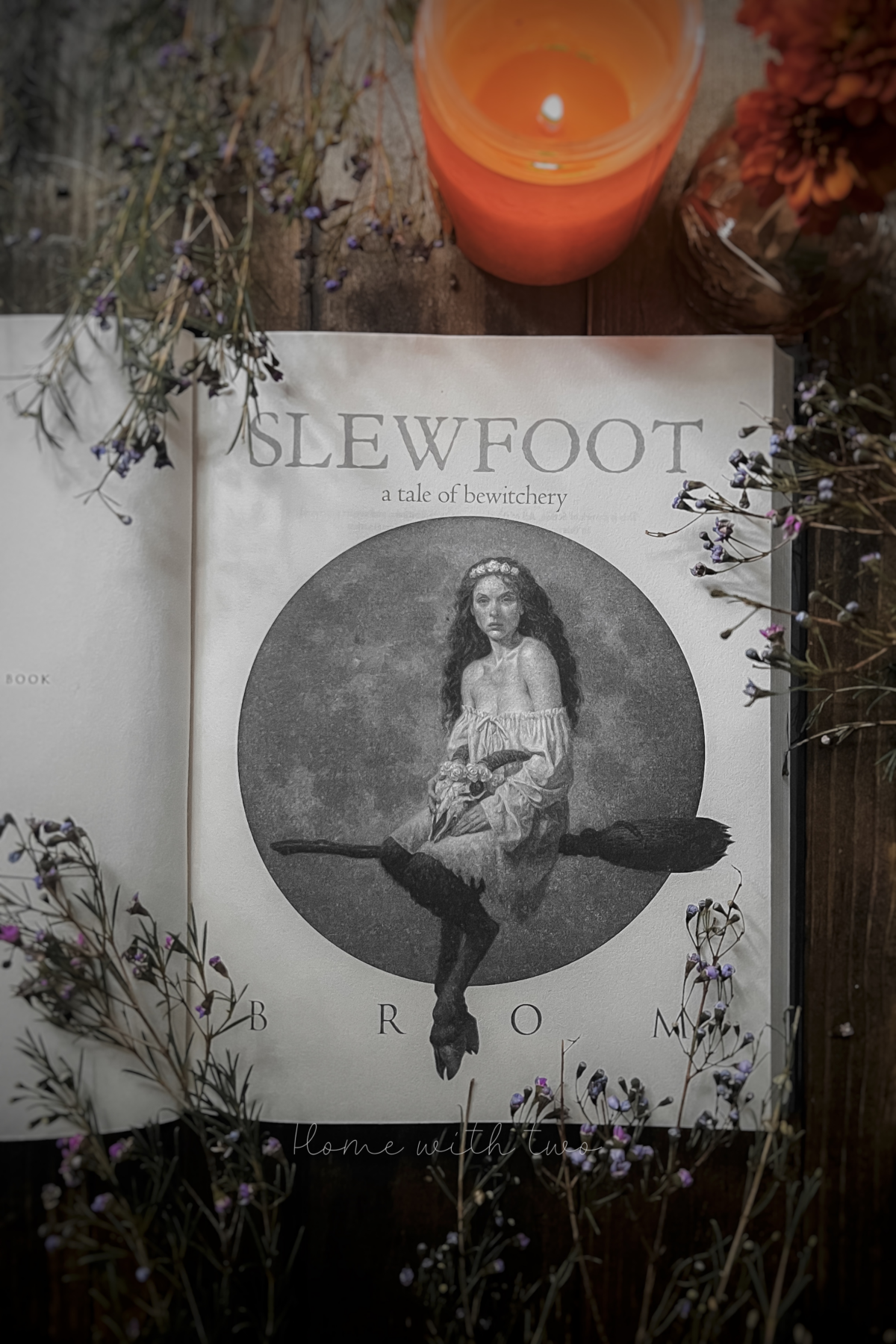
Don’t judge a book by its cover? Not with Slewfoot. I picked this one up purely because of its dark cover art. Like it was silently watching me from the shelf, calling me to grab it.
Side note, Brom’s artistic magic doesn’t stop at the cover – inside the book, he illustrates all the creatures himself.
I picked up Slewfoot for my “September of Witches” reading stack. I went in knowing absolutely nothing about the story. Zero expectations. What I walked away with was this lingering emotional ache that hovered somewhere between feminine rage and a deep devastation.
This post could contain affiliate links, which means I would receive a small commission at no cost to you should you shop using the links.
I found myself grieving long before I fully understood why.
It ended up being not just another witch story to add to my list. The deeper I sank into the story, the more it felt less like fiction and more like folklore being rewritten in real time.
Brom’s Slewfoot blends historical horror, witch folklore, and folk horror storytelling into a novel that examines fear, religion, and the long history of women being labeled monstrous.
Feminine Rage in Folklore and the Themes of Slewfoot
One of the most fascinating patterns in folklore is how often women’s anger becomes some supernatural being before it is ever allowed to be what it truly is: a normal human emotion.
Throughout Slewfoot, men’s anger moves through the story with an unsettling sense of legitimacy. It is portrayed as powerful, righteous, even necessary for the community as a whole. Male rage becomes something that maintains order, something communities accept as protection.
Women’s rage, however, gets shaped into something communities can fear.
Slewfoot does not simply tell a story about witchcraft. It examines how communities create witches, how suspicion grows like mold in damp spaces, and how quickly suffering is reframed as sin when it becomes inconvenient.
The labeling of women as monstrous and the fear of feminine rage are not separate forces. They mirror each other. One creates the other. This pattern echoes throughout the historical witch trials, where social anxiety, religious fear, and patriarchal control frequently met under the accusation of witchcraft.
Folk Horror and Monstrosity in Slewfoot
Folk horror often presents monsters as something lurking in forests, but Slewfoot slowly shifts that expectation. The true terror arrives dressed in ordinary apparel.
There were moments while reading where I found myself almost begging Slewfoot to emerge from the woods to remove the monsters.
This novel forces you as the reader to feel uncomfortable. It asks you to sit inside a slow escalation of cruelty and confront how easy it is for ordinary people to justify extraordinary harm when it is wrapped in religion, fear, or social order.
The figure of Slewfoot himself complicates the idea of monstrosity even further. He does not simply represent fear, he reflects it back, exposing how communities explain and justify their own violence.
By the end, the story leaves a lingering unease, not from what waits in the forest, but from what thrives inside righteous communities.
Witch Folklore and Historical Horror Themes in Slewfoot
Folk stories rarely disappear. They evolve, they change shape, they shed details all while keeping their emotional skeleton intact. Slewfoot feels like one of those stories, less concerned with retelling history and more interested in preserving the feeling of it. The emotional truths buried deep inside history.
The novel reminds readers that history repeats itself, only dressed in different costumes.
It reminds readers that folklore does not just record what societies fear. It records who societies fear becoming.
shop this post

